
Key Takeaways:
-
Cats are agile and curious, making standard fences often insufficient.
-
Effective cat proof fences combine height, smooth surfaces, and toppers/netting.
-
Environmental enrichment, safe outdoor spaces, and smart tracking solutions improve safety and peace of mind.
-
Modern GPS trackers like the P2 Smart GPS Tracker for Cats & Dogs provide real-time monitoring for extra security.
1. Understanding Why Cats Jump Fences
Cats are instinctively explorers. Even a well-fed cat may attempt to escape, jump, or climb due to curiosity or hunting instincts. Common behaviors include:
-
Climbing walls and fences: A typical domestic cat can reach heights of 5–6 feet when motivated, with some agile breeds jumping even higher. (average height for a cat)
-
Territorial exploration: Cats may leap onto fences to survey surroundings or chase prey.
-
Social or stress-driven behavior: Sudden noises, neighbors’ cats, or boredom can trigger escape attempts.
Descriptive insight: Imagine your cat perched on a fence, tail flicking, eyes scanning the yard—a natural predator in miniature, testing boundaries of its domain.
2. Designing Cat Proof Fences: Physical Solutions
2.1 Fence Height & Materials
-
Height matters: Domestic cats can easily scale fences under 6 feet. Installing taller structures or adding extensions dramatically reduces jumping success.
-
Material choice: Smooth vinyl, metal, or specially treated wood prevents gripping, while rough surfaces and horizontal beams encourage climbing.
Visual suggestion: Diagram showing “cat average jump height” vs. fence height.
| Feature | Recommended Value |
|---|---|
| Minimum fence height | 6 ft (1.8 m) |
| Smooth materials | Vinyl, metal, or plastic |
| Rough surfaces | Avoid; encourage climbing |
2.2 Topper Solutions & Cat Proof Netting
-
Inward-angled toppers: These lean back into the yard, preventing cats from using their natural jump trajectory.
-
Fence rollers: Rotating bars mounted atop fences make balance impossible, so cats slide off before escaping.
-
Cat-proof netting: Flexible netting with small openings stops cats from climbing, while still allowing airflow.
Tip: Use a combination of these methods for maximum effectiveness, especially for agile breeds or larger cats. (cat fence barrier)
2.3 Securing the Perimeter
-
Check for gaps under or through fences, including between panels or under gates.
-
Seal all access points with mesh, hardware cloth, or pet gates tall enough to prevent climbing. (pet gate for cats tall)
Pro tip: Regular maintenance is key; even small openings invite escape.
3. Environmental & Behavioral Strategies
3.1 Enrichment & Boredom Prevention
Cats are intelligent and need stimulation. Enhancing your yard with:
-
Cat trees, perches, and tunnels
-
Puzzle feeders and interactive toys
-
Safe shaded areas for resting
…reduces the motivation to escape.
Descriptive insight: Watching a cat explore a catio or play with a puzzle feeder keeps them mentally and physically engaged, reducing fence-jumping behavior.
3.2 Supervised Outdoor Time
-
Use a harness and leash for controlled exploration.
-
Training cats gradually to tolerate outdoor harnesses reduces stress.
Internal link suggestion: Learn more about safe outdoor activity for pets in cold weather.
4. Integrating Technology: GPS Tracking

Even the most secure cat-proof fences can’t account for every possible escape scenario. Modern GPS trackers provide a safety net:
-
P2 Smart GPS Tracker for Cats & Dogs delivers real-time location monitoring.
-
Alerts can notify owners if the cat is near a fence or has moved outside the safe zone.
-
Useful for monitoring adventurous cats who may jump up at a person or scale unexpected heights.
Descriptive insight: Visualize your cat wandering the yard, while you track their position from a smartphone app—peace of mind without confinement.
5. Visual Planning: Cat Fence Strategies
Recommended cat proof layout:
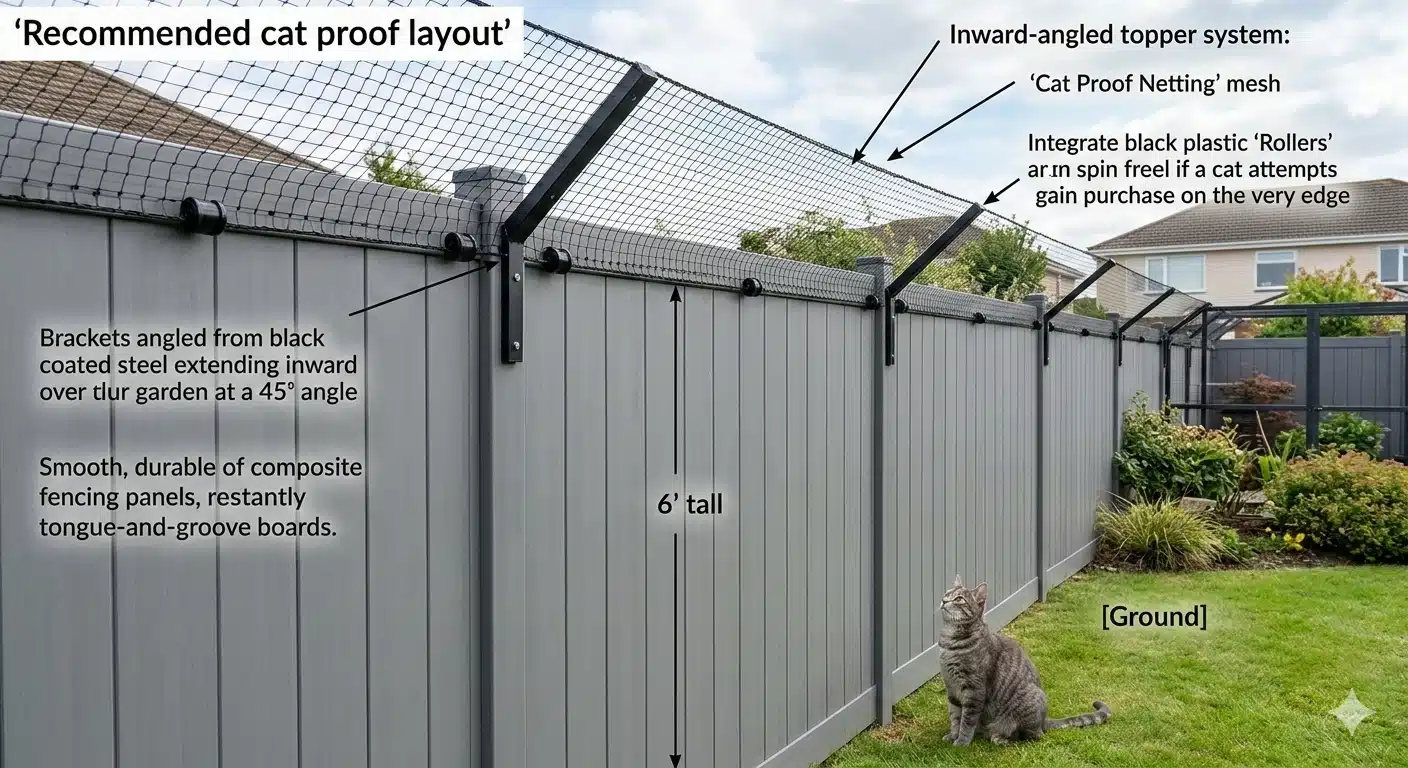
Recommend cat proof layout
Chart Idea: Comparison of traditional fence vs. cat-proof fence effectiveness.
| Fence Type | Escape Probability | Maintenance |
|---|---|---|
| Standard Wooden | High | Medium |
| Smooth Vinyl + Toppers | Low | Medium |
| Cat Proof Netting + Enclosure | Very Low | Low |
6. Extra Tips
-
Consider the average cat dimensions when building or upgrading a fence. Adult cats vary in size; some larger breeds can jump unusually high. (how big can cats get)
-
Combine behavioral enrichment with physical deterrents for best results.
-
Evaluate your yard for climbing aids and remove them where possible.
Optional internal link: Learn how GPS trackers compare to other solutions like Tile or AirTag in tracking missing pets.
7. Conclusion
Creating a secure environment for your cat is a blend of smart fencing, enrichment, supervision, and technology. A properly designed cat proof fence, paired with mental stimulation and a GPS tracker like the P2 Smart GPS Tracker, ensures your cat enjoys freedom safely.
Final visual takeaway: Imagine your cat exploring safely within a catio, monitored in real-time, with no need to leap fences—an ideal balance between independence and security.