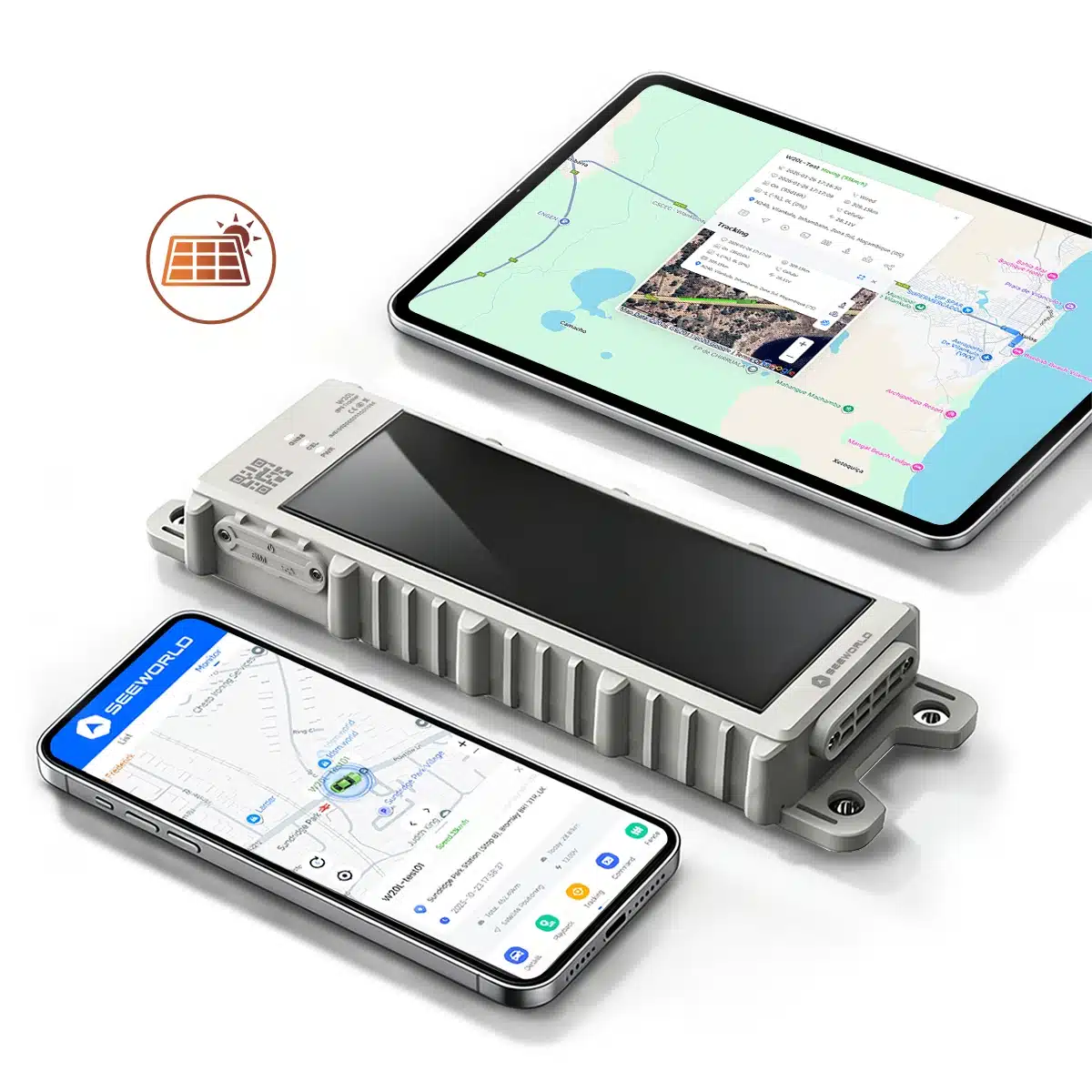
In the rapidly evolving landscape of vehicle GPS tracking and telematics, cellular connectivity is the backbone that defines a solution’s reliability, power efficiency, and global scalability. The 3GPP (3rd Generation Partnership Project) classifies LTE technologies into various categories to meet diverse IoT needs.
Among these, LTE Cat.1, Cat-M1 (LTE-M), and LTE Cat.4 have emerged as the primary standards for GPS tracking devices. While they operate on the same LTE foundation, their performance profiles vary significantly across different geographic regions and functional requirements.
1. Comparative Analysis: Network Availability & Global Reach
One of the most critical factors in selecting a connectivity standard is regional network maturity. A device is only as effective as the network it can connect to.
| Feature | LTE Cat.1 | LTE Cat-M1 (LTE-M) | LTE Cat.4 |
| Global Coverage | Exceptional (Existing LTE) | Selective (Region-dependent) | Ubiquitous (Broadband LTE) |
| Ideal For | International Fleet Logistics | Low-power Asset Tracking | Video Telematics & Dash Cams |
| Network Longevity | High (Replaces 2G/3G) | High (IoT dedicated) | Very High (High-speed infra) |
-
LTE Cat.1: Since it operates on standard LTE deployments, it is widely supported across Asia, Europe, the Middle East, and Africa. As 2G and 3G networks phase out, Cat.1 has become the premier choice for global fleet deployments requiring cross-border mobility.
-
Cat-M1: While prevalent in North America, Japan, and Australia, coverage remains sparse in many developing markets. This makes it less versatile for international logistics, where seamless roaming is required.
-
Cat.4: Utilizes full broadband networks. While available globally, its high power consumption often makes it “overkill” for standard positioning tasks.
2. Deep Dive into Connectivity Categories
LTE Cat.1: The Balanced Standard for Telematics
LTE Cat.1 delivers an optimal mix of throughput and cost-efficiency. With up to 10 Mbps downlink and 5 Mbps uplink, it provides ample bandwidth for real-time location updates, emergency alarms, and sophisticated telematics data.
For commercial vehicle management and car rental services, Cat.1 offers the stability of LTE without the complexity of high-speed modules. Modern SEEWORLD hardware solutions often leverage Cat.1 to ensure that vehicles remain connected even in high-mobility environments, utilizing power-saving features like eDRX and PSM to maintain efficiency.
LTE Cat-M1: Engineered for Low-Power Longevity
Introduced in 3GPP Release 13, Cat-M1 (or LTE-M) trades speed for extreme power efficiency and deeper signal penetration (e.g., in underground parking or dense urban areas).
-
Bandwidth: Narrow 1.4 MHz.
-
Throughput: 300 kbps to 1 Mbps.
-
Best Use Case: Wireless asset trackers or long-term parked vehicles where a multi-year battery life is non-negotiable.
LTE Cat.4: High-Bandwidth Video Integration
When a solution requires more than just coordinate data—such as AI video telematics, MDVRs, or live dash cam feeds—LTE Cat.4 is the necessary choice. With speeds up to 150 Mbps, it handles high-definition data streaming with ease. However, due to its higher hardware cost and power draw, it is rarely used for basic, battery-operated tracking devices.
3. Decision Matrix: Which One Should You Choose?
Selecting the right category ensures long-term deployment success and lower operational costs (TCO).
-
Choose Cat-M1 if your priority is ultra-low power consumption and your operation is confined to regions with mature LPWA (Low Power Wide Area) networks.
-
Choose Cat.1 if you need seamless global roaming, real-time reporting, and a future-proof replacement for sunsetting 2G/3G networks. It is the “Goldilocks” solution for most professional fleet applications.
-
Choose Cat.4 only if your application requires intensive data throughput, such as real-time video monitoring.