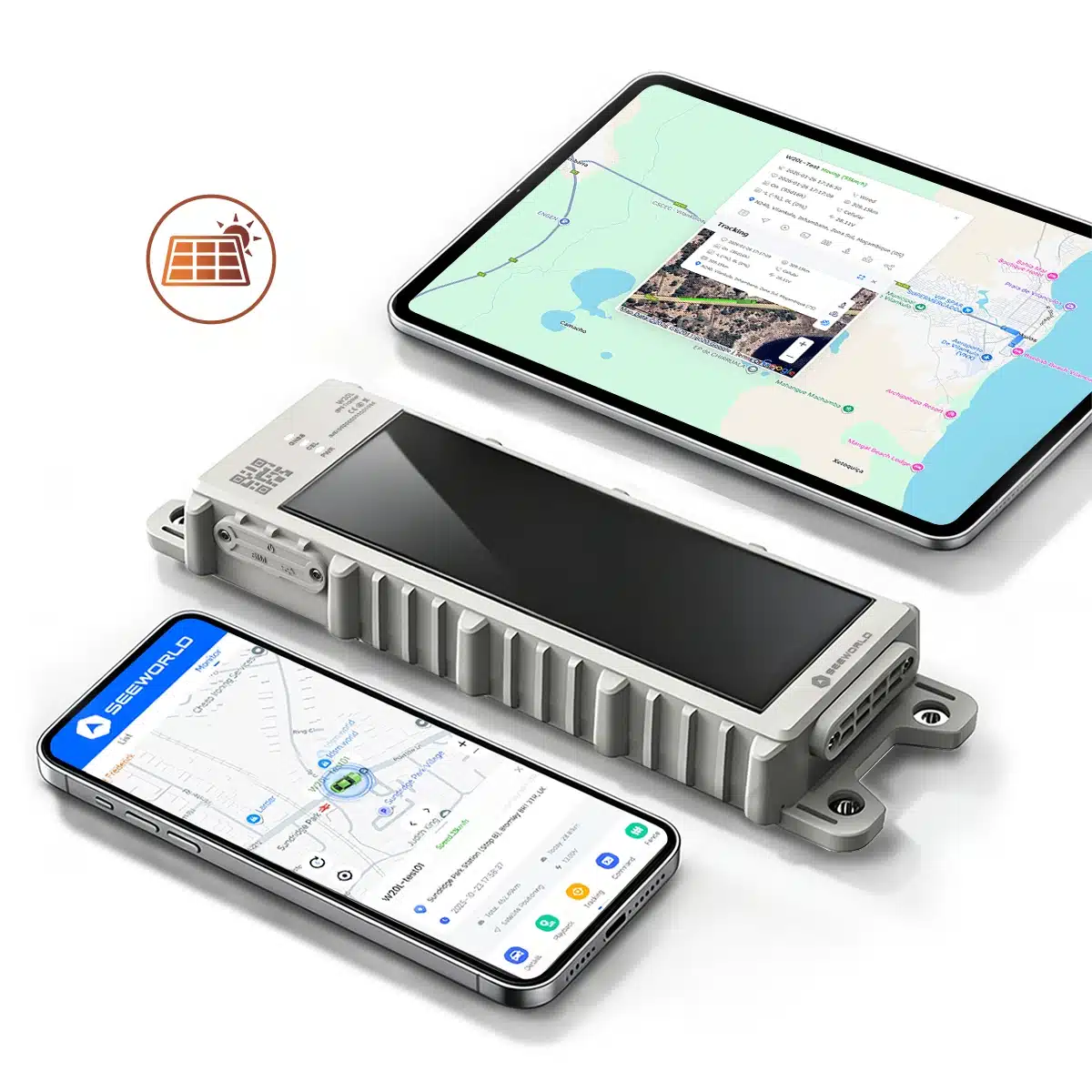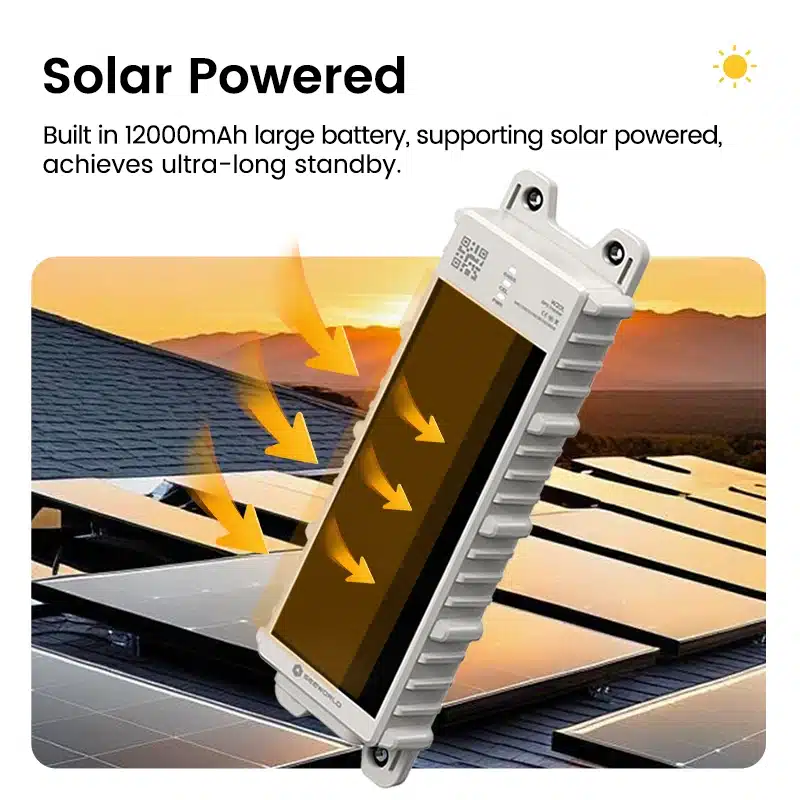
A solar power GPS tracker is a tracking device that uses solar panels to continuously recharge an internal battery, enabling long-term asset monitoring without frequent maintenance. Compared with battery-powered GPS trackers, solar-powered tracking devices offer longer operational lifespans, lower maintenance costs, and higher tracking frequency—especially for outdoor assets such as trailers, containers, and construction equipment. This guide explains how solar-powered GPS tracking technology works, how it compares to traditional battery trackers, and how businesses can deploy solar tracking solutions for efficient asset monitoring.
Key Takeaways
-
A solar power GPS tracker combines solar panels, rechargeable batteries, and GPS modules to enable long-term asset tracking.
-
Solar trackers reduce maintenance costs by minimizing battery replacement and site visits.
-
They are ideal for solar trailer tracking, outdoor equipment, containers, and remote assets.
-
Battery-powered trackers remain useful for indoor assets or concealed installations.
-
Solar-powered GPS devices can operate for years with minimal maintenance when exposed to regular sunlight.
-
New solar tracking technologies integrate satellite connectivity, low-power IoT networks, and intelligent power management.
What Is a Solar Power GPS Tracker?
A solar power GPS tracker is an asset tracking device that uses solar energy to power its GPS and communication systems. The device contains a solar panel that converts sunlight into electrical energy, which is stored in a rechargeable battery and used to power the tracker.
Unlike conventional trackers that rely entirely on internal batteries, solar-powered devices continuously recharge themselves during daylight hours. This allows them to operate for extended periods with little or no manual charging.
Solar-powered GPS trackers are commonly used for:
-
Trailer tracking
-
Shipping container monitoring
-
Construction equipment tracking
-
Agricultural machinery monitoring
-
Remote asset management
Because of their self-sustaining energy supply, these trackers are widely used in industries where assets remain outdoors for long periods of time.
How a Solar GPS Tracking Device Works
Understanding the operating process of a solar GPS tracking device helps explain why these systems are ideal for long-term asset monitoring.
Step-by-Step Working Process
1. Solar Energy Collection
The solar panel absorbs sunlight and converts it into electrical energy through photovoltaic cells.
2. Energy Storage
The generated energy charges an internal rechargeable battery, typically lithium-ion or lithium-polymer.
3. GPS Location Acquisition
The GPS module receives signals from satellites and calculates the device’s precise location.
4. Data Processing
The internal processor gathers information such as location, movement, and time.
5. Data Transmission
The tracker transmits location data to a cloud platform via cellular networks or satellite communication.
6. Remote Monitoring
Users can view asset locations through a web platform or mobile app.
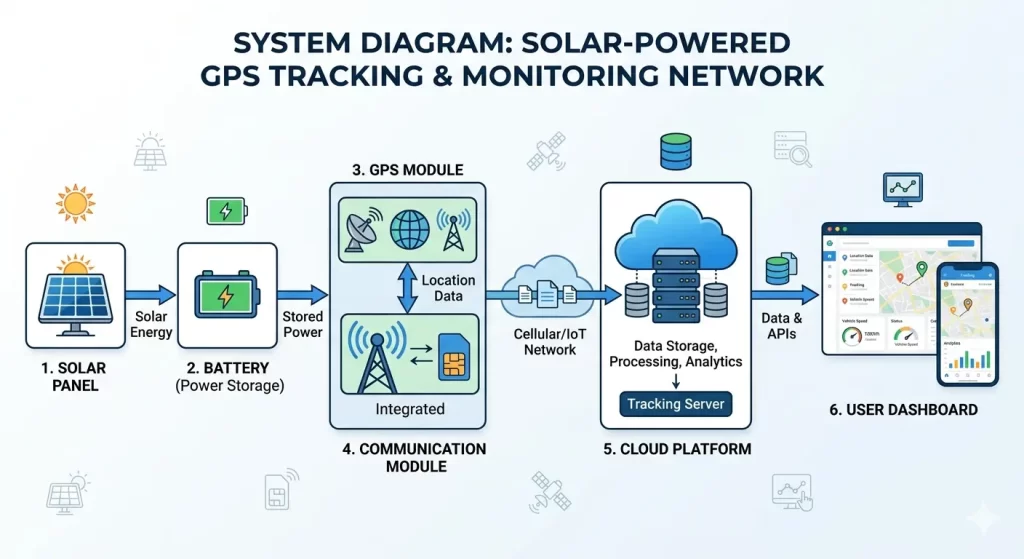
Solar-powered GPS Tracking & Monitoring Network
Solar Panel → Battery → GPS Module → Communication Module → Cloud Platform → User Dashboard
Key Components of a Solar Powered GPS Tracking System
| Component | Function |
|---|---|
| Solar Panel | Converts sunlight into electrical power |
| Rechargeable Battery | Stores energy for night operation |
| GPS Module | Determines geographic location |
| Communication Module | Sends data via cellular or satellite network |
| Motion Sensors | Detect movement or tampering |
| Power Management System | Optimizes energy consumption |
These components work together to create a self-sustaining GPS tracking system.
Solar GPS Tracker vs Battery-Powered GPS Tracker
Understanding the difference between solar and battery-powered trackers helps businesses choose the right solution.
| Feature | Solar Power GPS Tracker | Battery Powered GPS Tracker |
|---|---|---|
| Power source | Solar panel + battery | Internal battery only |
| Maintenance | Very low | Moderate |
| Lifespan | Several years | Limited by battery |
| Installation | Requires sunlight exposure | Flexible placement |
| Tracking frequency | High-frequency possible | Limited by battery capacity |
| Best use case | Outdoor assets | Indoor or hidden assets |
Solar-powered trackers provide long-term monitoring with minimal maintenance, while battery trackers offer greater flexibility in installation locations.
Advantages of Solar Powered GPS Trackers
1. Long-Term Autonomous Operation
A gps tracker solar powered can operate continuously as long as it receives sufficient sunlight. This dramatically reduces downtime compared to traditional battery trackers.
2. Reduced Maintenance Costs
Replacing batteries in large asset fleets can be expensive. Solar-powered tracking reduces:
-
technician visits
-
battery replacement costs
-
operational downtime
This leads to lower total cost of ownership.
3. Ideal for Remote Asset Monitoring
Solar trackers are particularly useful for assets located in remote areas, such as:
-
mining equipment
-
construction sites
-
oil and gas infrastructure
-
agricultural machinery
These locations often make manual battery replacement difficult.
4. Higher Tracking Frequency
Because solar energy continuously replenishes the battery, solar trackers can support more frequent location updates without compromising battery life.
5. Environmentally Sustainable
Solar tracking systems reduce the need for disposable batteries, supporting more environmentally responsible asset management.
Limitations of Solar Powered GPS Trackers
Despite their advantages, solar trackers are not ideal for every scenario.
Dependence on Sunlight
Solar devices require periodic exposure to sunlight to maintain battery charge.
Installation Considerations
The solar panel must typically face upward or remain unobstructed.
Higher Initial Hardware Cost
Solar-powered devices often have higher upfront costs compared with simple battery trackers.
Best Applications for Solar Trailer Tracking
Solar-powered tracking solutions are particularly popular in logistics and transportation industries.
Trailer Tracking
Many logistics companies deploy solar trailer tracking systems because trailers often sit idle for long periods but remain outdoors.
Solar-powered trackers allow trailers to be monitored even when they are disconnected from trucks.
Container Tracking
Shipping containers frequently travel through remote or international routes where maintenance access is limited.
Solar-powered trackers ensure continuous monitoring throughout the supply chain.
Construction Equipment Monitoring
Construction companies use solar trackers to monitor high-value equipment such as:
-
excavators
-
generators
-
cranes
Tracking helps prevent theft and improve equipment utilization.
Agricultural Machinery
Farm equipment often operates in large open fields where solar-powered tracking is ideal.
Recommended Solution: Solar Powered Satellite Asset Tracker
For assets located in extremely remote areas without cellular coverage, satellite-enabled solar trackers provide a reliable solution.
One example is the W20L Solar Powered Satellite Communication Tracker, which combines solar charging with satellite connectivity for continuous monitoring of remote assets.

Key capabilities typically include:
-
solar-powered charging for long-term deployment
-
satellite communication for global coverage
-
durable design for outdoor environments
-
long operational lifespan with minimal maintenance
This type of tracker is particularly useful for industries such as:
-
maritime logistics
-
remote infrastructure monitoring
-
cross-border transportation
-
large-scale asset fleets
Efficiency and Lifespan Factors for Solar GPS Tracking Devices
Several factors influence the performance of a solar tracking system.
Sunlight Availability
Regions with more sunlight enable better solar charging efficiency.
Solar Panel Efficiency
Higher-quality photovoltaic cells convert more sunlight into energy.
Battery Capacity
A larger battery provides longer operation during low-light periods.
Tracking Interval
Frequent location updates consume more energy.
Environmental Conditions
Dust, snow, or shading may reduce solar panel efficiency.
Future Trends in Solar GPS Tracking Technology
Solar-powered tracking systems continue to evolve with new technologies.
AI-Powered Asset Analytics
Future tracking platforms will use AI to analyze asset usage patterns and optimize logistics operations.
Hybrid Connectivity (Cellular + Satellite)
Devices will increasingly support multiple communication networks.
Ultra-Low Power GNSS Chips
Next-generation GPS chips reduce energy consumption while improving accuracy.
Edge Computing Trackers
Some trackers will process data locally before transmitting it, reducing bandwidth usage.
Related Asset Tracking Resources
For deeper insights into asset tracking technologies, explore these guides:
-
The complete guide to non-powered asset tracking
https://www.seeworldgps.com/knowledge/the-complete-guide-to-non-powered-asset-tracking-2025-update/ -
Ultra-slim wireless asset tracker technology overview
https://www.seeworldgps.com/knowledge/ultra-slim-w21l-wireless-asset-tracker-long-lasting-gps-tracking-for-modern-assets/
These resources explain additional tracking technologies and deployment strategies for modern logistics systems.