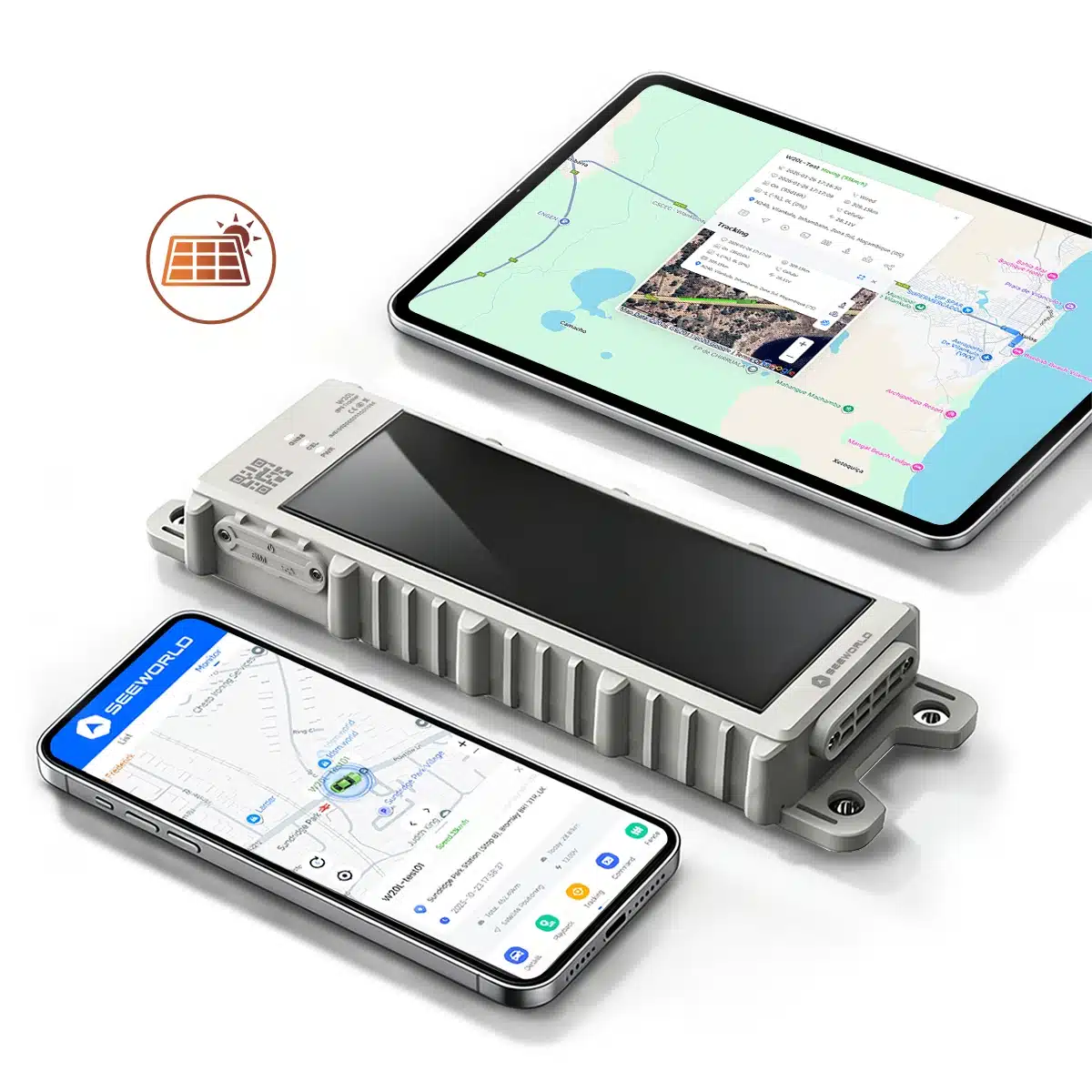
A Practical, Descriptive, and Data-Driven Overview for Modern Operations
1. Introduction: Why Non-Powered Asset Tracking Matters More Than Ever
Across construction sites, logistics yards, rental fleets, and field service operations, non-powered assets—trailers, containers, tools, generators, tanks, pallets, and outdoor equipment—are constantly moving between locations. Unlike powered vehicles, these assets lack an onboard energy source, making traditional telematics impossible.
This is where GPS asset management comes in. With specialized asset tracking GPS devices, organizations can finally see:
-
Where each asset is located
-
How often it’s used
-
Whether it is being misallocated, idling, or at risk
-
Who last deployed or moved it
In an era where every delay, loss, and misplacement translates directly into operational cost, gps asset tracking systems have become foundational rather than optional.
For additional context, see this related guide on
subtle vehicle and asset surveillance using compact trackers.
2. What Counts as a Non-Powered Asset?
Non-powered assets include any equipment that lacks its own power source but holds operational value:
| Asset Category | Examples | Risk Factors |
|---|---|---|
| Construction Equipment | Skid buckets, scaffolding, tools, compressors | Misplacement, job-site hopping |
| Logistics Containers | Dry vans, pallets, containers, crates | Theft, delayed returns |
| Utilities & Public Work Assets | Street cabinets, temporary road signs, and tanks | Untracked redeployment |
| Rental Industry Assets | Portable toilets, trailers, machinery attachments | Over-renting / under-renting |
3. How Non-Powered GPS Asset Tracking Works
Because these assets cannot power a telematics unit, tracking relies on battery-powered, ultra-low-consumption GPS modules engineered for long-term deployment.
Core components:
-
Satellite & cellular positioning
-
Periodic location check-ins (e.g., every 6–12 hours)
-
Wake-on-motion behavior to preserve battery life
-
Cloud-based dashboards for real-time visibility
-
Geofencing alerts to flag unauthorized movement
For a deeper look at operational advantages, consider
how GPS reduces uncertainty in asset management.
4. Key Benefits of GPS Tracking for Unpowered Assets
4.1 Improved Location Visibility
Organizations gain a digital map of all assets—no more manual spreadsheets or guesswork.
4.2 Loss & Theft Prevention
Geofences detect when a trailer, tool, or crate leaves the work zone unexpectedly.
4.3 Higher Utilization Rates
A common finding from fleet studies:
20–40% of non-powered assets sit idle simply because no one realizes where they are.
GPS data reveals actual usage, so surplus assets can be redeployed or sold.
4.4 Faster Dispatching & Recovery
Crews save time by locating the nearest available equipment instantly.
4.5 Data for Long-Term Asset Planning
Historical usage helps answer critical questions:
-
Should we rent or buy more equipment?
-
Which locations are underutilizing resources?
-
Where do seasonal bottlenecks occur?
To understand how software ties everything together, you can explore
The essential benefits of asset tracking software.
5. Choosing the Right GPS Tracker for Non-Powered Assets
What matters most:
| Feature | Why It’s Important |
|---|---|
| Long battery life | Assets may remain stationary for months |
| Slim or compact design | Avoids interference; easier to hide |
| Weather-resistant build | Many assets stay outdoors |
| Reliable cellular coverage | Ensures consistent check-ins |
| Motion-activated tracking | Conserves battery while improving accuracy |
6. Real-World Application Examples
6.1 Construction
-
Track materials and attachments across multiple job sites
-
Reduce delays caused by missing tools
-
Recover misplaced high-value components
6.2 Logistics & Freight
-
Track trailers, pallets, and containers across warehouse yards
-
Improve inbound/outbound coordination
-
Reduce detention time and demurrage fees
6.3 Rental Industry
-
Automate inventory tracking
-
Prevent loss during long-term rentals
-
Enable precise billing and return verification
7. Where SEEWORLD Solutions Fit Naturally
To illustrate how real-world devices support these operations, here’s how two of your products can be organically embedded into the context—without creating any marketing push.
7.1 W21L Ultra-Thin Asset Tracker
A lightweight, low-profile device like the
W21L Ultra-Thin Hidden Long-Standby Asset Tracker
fits perfectly into scenarios where discreet placement is essential—such as toolboxes, small containers, rental equipment, or assets frequently left in public environments.
Its thin form factor aligns well with:
-
Covert anti-theft placement
-
Situations with tight mounting spaces
-
Long-term periodic reporting for idle assets
7.2 S11 Mini GPS Tracker
The
S11 Mini GPS Tracker
is suitable for movable equipment requiring higher-frequency reporting or mixed-asset deployment (both powered and unpowered).
Because of its compact design, it can be used in environments where space constraints make traditional trackers impractical.
Both devices complement a gps asset tracking system designed for modern fleets and multi-site operations.
8. Visual: Quick Comparison Table for Tracker Selection
| Tracking Requirement | Recommended Specs | Suitable Device Example |
|---|---|---|
| Long-term idle assets | Ultra-low power, thin profile, periodic reporting | W21L |
| Mixed environment (powered + unpowered) | Compact, motion-sensing, flexible mounting | S11 |
| High risk of theft | Hidden design, geofence alerts | W21L / S11 |
| Frequent relocation | Higher update frequency | S11 |
9. Implementation Tips for Organizations
-
Start with critical, high-value assets first
-
Use geofences around job sites, yards, and depots
-
Define a clear asset ID system in your dashboard
-
Train field teams to check asset availability digitally
-
Review utilization data every quarter for optimization
10. Conclusion
Non-powered asset tracking is no longer just a security measure—it is a central part of asset management GPS tracking strategies that improve efficiency, reduce losses, and unlock data-driven decision making. With the right gps tracker for assets, companies gain visibility and control across distributed operations, enabling a modern and future-proof asset ecosystem.